WHY SELF MEDICATION IS DANGEROUS, AND PROPER DIAGNOSIS MATTERS.
In a culture where self-medication is the default, many Nigerians unknowingly trade long-term safety for short-term convenience. While popping a pill for a fever feels quick, treating symptoms without a professional diagnosis fuels dangerous drug resistance and masks underlying conditions. True cost-savings don't come from avoiding the doctor; they come from accurate testing that prevents repeated, failed treatments. By leveraging digital platforms like myHealth, you can skip the hospital queues
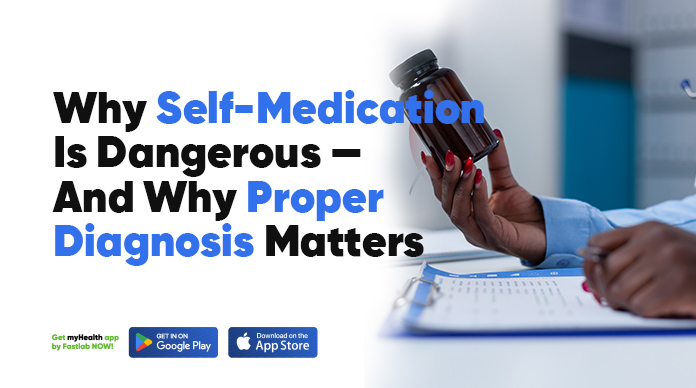
In Nigeria, self-medication is common. A headache prompts a painkiller. Fever leads to antimalarial drugs. A lingering cough triggers antibiotics often without medical consultation. Pharmacies often serve as the first care point. Informal advice circulates. Treatment starts immediately. For many, this seems efficient. It saves time, avoids hospital queues, and appears cheaper. But beneath this convenience lies a growing problem. Self-medication without proper diagnosis drives delayed treatment, drug resistance, and preventable complications nationwide.
The issue is not intent to harm. Symptoms often replace diagnoses. Fever is not always malaria. Pain is not always infection. Weakness is not always typhoid. Yet medications are taken based on assumptions, not evidence. The body signals through symptoms, but they require interpretation. Without tests or evaluation, internal conditions remain uncertain.
A major concern is antibiotic misuse. Antibiotics target bacterial infections but are often used for viral illnesses without benefit. They may be started and stopped prematurely or combined with other drugs without supervision. This misuse fosters antibiotic resistance. Bacteria evolve to resist treatment, and infections become harder, costlier, and more dangerous to treat. Medication can mask symptoms, creating false recovery. Delayed proper care allows conditions to worsen.
The financial argument for self-medication often fails. Initial drug purchases seem cheaper, but repeated failed treatments and eventual hospital visits cost more. Early diagnostics prevents this cycle. For example, persistent fever assumed as malaria leads to anti-malarial, then antibiotics when no improvement occurs. Later, tests reveal a urinary tract infection needing targeted antibiotics, delayed extended illness, and expenses. The problem is not drug availability but lack of diagnosis. Culturally, many Nigerians endure discomfort and minimize illness until severe. Seeking care is delayed with the thought, "it will pass."Past long hospital waits discourage early visits.
Healthcare is evolving. Access to structured consultation and testing is becoming streamlined. Digital platforms enable patients to consult licensed physicians, get test guidance, and interpret results without delay. Responsible illness management is not passive, but informed action. If symptoms persist, medication fails, or the cause is unclear, evaluation is safer.
Simple blood tests, urine analysis, or targeted screening provide quick clarity. Self-medication may feel like control, but real control comes from information. Diagnosis-guided treatment speeds recovery, reduces complications, manages costs, and builds care confidence. The goal is not to remove personal responsibility but to direct it toward evidence-based choices.
Before the next medication course, pause. Confirm. Understand. Healthcare should start with knowledge, not assumption. At Fastlab, we focus on making knowledge accessible through consultation and verified diagnostics, patients make informed decisions before treatment. In a country where self-medication is routine, choosing diagnosis first is wisdom, not weakness.
Install the myHealth App from Googe Play Store to get started.