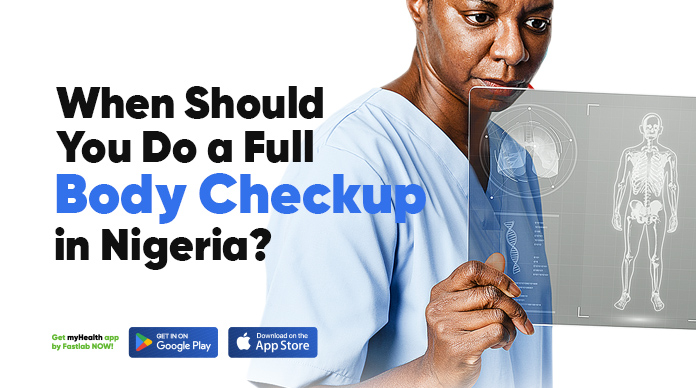
WHEN SHOULD YOU HAVE A FULL BODY CHECK?
When last did you check your health when you weren’t feeling sick?. Many people wait for serious symptoms before testing, yet high blood pressure, diabetes, and kidney issues often start silently. A full body checkup isn’t a luxury; it’s a smart way to catch risks early, save money, and stay in control of your health. Think of it as preventive maintenance for your body, just like servicing your car. With Fastlab, you get consultation first, targeted screening second, and clear guidance not rando
Many Nigerians undergo medical testing only when symptoms appear. A persistent cough. A recurring fever. Sudden weakness. Sharp pain.
Healthcare is reactive; tests respond to symptoms. But what if you feel fine? The concept of a “full body checkup” often seems unnecessary, especially where healthcare is mostly out-of-pocket. Many assume no symptoms mean no need for tests.
The flaw in this logic is clear: not all illnesses announce themselves. Some serious health conditions in Nigeria start silently. High blood pressure can persist for years without signs. Diabetes progresses gradually before symptoms appear. Kidney and liver issues often develop unnoticed. Some infections remain mild initially while affecting internal systems. By the time symptoms are clear, the condition may be advanced. Preventive health screening is a strategy, not a luxury.
A full body checkup identifies risks early when intervention is simpler, cheaper, and more effective. Lifestyle changes in Nigeria over two decades urban living, sedentary work, processed foods, and stress have increased chronic conditions. Yet many still believe routine testing is for the elderly. That belief is outdated. Someone in their early thirties may have high blood pressure unnoticed. A person in their forties may have abnormal cholesterol while feeling energetic. A professional enduring Lagos traffic may attribute fatigue to stress while a metabolic imbalance exists. The body does not always signal dramatically.
When should you consider a full-body checkup? Age matters. Adults over thirty should consider periodic screening, especially with family histories of hypertension, diabetes, heart disease, or kidney issues. Annual screening is vital after forty. Lifestyle matters. High-stress jobs, irregular sleep, limited activity, or poor diet warrant more frequent monitoring. Family history matters. Close relatives with chronic illnesses increase the value of preventive testing.
A proper full body checkup includes full blood count, blood sugar, lipid profile, liver and kidney function tests, and blood pressure evaluation. Physicians may recommend additional tests based on risk. The goal is not to run every test, but the right tests for your life stage and risk.
Preventive screening also makes financial sense. Treating advanced disease costs far more than early detection. Hospital stays, emergency care, and long-term medication are expensive compared to routine tests. Small changes in diet, exercise, or medication guided by early results can prevent complications.
Psychologically, clarity reduces anxiety. Knowing your numbers blood pressure, sugar, cholesterol gives control and shifts health from uncertainty to measurable reality. Some avoid testing, fearing bad news. But avoiding tests delays awareness; it does not prevent disease.
In modern Nigeria, structured healthcare and digital platforms make preventive screening more accessible. A full-body check respects the human body's complexity. You service your car regularly, even when it runs smoothly. You update your phone software before it crashes. Preventive maintenance is logical in all aspects of life.
Your health deserves the same discipline. At Fastlab, the approach is simple: consultation first, targeted screening second, clear interpretation third. Not random tests. Not unnecessary expenses. Just structured preventive care based on evidence.
You may feel fine today. The question is not whether you are sick. The question is whether you are certain. Sometimes the smartest medical decision is the one you make before symptoms begin.
Install myHealth App and start your preventive maintenance.