Medical Emergencies vs Conditions that require Lab Testing.
When symptoms appear, families respond quickly. Advice comes from many directions. Some cases prompt immediate hospital visits, while others lead to pharmacy purchases. Mostly, decisions rely on instinct rather than clarity.
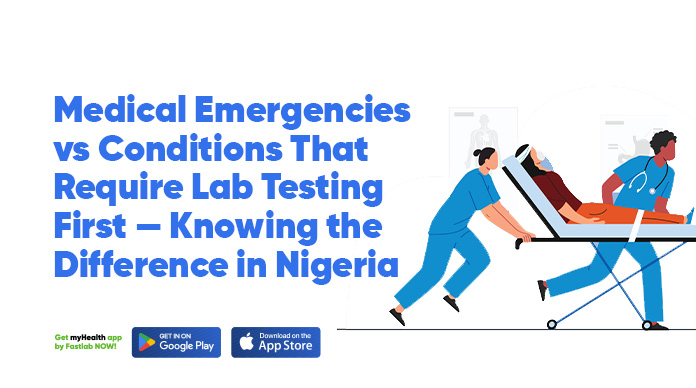
In Nigeria, urgency and uncertainty often overlap. When symptoms appear, families respond quickly. Advice comes from many directions. Some cases prompt immediate hospital visits, while others lead to pharmacy purchases. Mostly, decisions rely on instinct rather than clarity. Not every health concern is an emergency. Not every symptom requires immediate medication.
Distinguishing true emergencies from conditions needing structured laboratory evaluation is a vital patient skill.
A medical emergency involves an immediate threat.
Severe chest pain, difficulty breathing, uncontrolled bleeding, sudden unconsciousness, seizures, stroke symptoms, or major trauma require urgent in-person care. Time is critical. Diagnostic testing occurs in the hospital, but stabilization is the priority.
Emergency care is essential in these cases.
Many anxiety-provoking health concerns are diagnostic questions, not emergencies.
Persistent fever without severe distress, recurrent headaches, ongoing fatigue, mild abdominal discomfort, changes in urination, or unexplained weight changes signal issues but not immediate crises.
Treating these as emergencies causes panic, ignoring them causes delay.
Structured evaluation is the appropriate response.
Discomfort often equates to urgency. Fever triggers antimalarial treatment; abdominal pain leads to antibiotics; headache prompts painkillers. Yet laboratory testing often offers clearer guidance than immediate medication. The key is stability.
If a person is conscious, breathing comfortably, communicating clearly, and not in severe distress, evaluation can precede treatment.
Laboratory testing is crucial in non-emergency cases.
If fever lasts beyond 48 hours, malaria parasite tests, full blood counts, or urinalysis clarify causes. Persistent fatigue calls for blood sugar, thyroid, or kidney tests. Ongoing abdominal discomfort requires targeted testing to distinguish infection, inflammation, or metabolic causes.
Repeated treatment without confirmation poses risks.
Self-medication complicates diagnosis. Partial antibiotic courses mask infection. Repeated painkillers hide disease progression. By hospital admission, the clinical picture is complex.
Overreacting to minor symptoms strains emergency services and raises healthcare costs.
Balance is necessary.
The structured approach is simple: assess severity first.
If symptoms are severe, sudden, or life-threatening, seek emergency care.
If symptoms persist but remain stable, consult a physician and pursue targeted laboratory testing.
Digital consultation simplifies this decision. Licensed physicians assess symptoms remotely, determine urgency, and recommend testing or referral. This prevents dangerous delays and unnecessary panic.
In Nigeria’s evolving healthcare environment, clarity must replace assumption.
Emergency rooms serve immediate threats.
Laboratories provide diagnostic clarity.
Confusing the two causes inefficiency.
Recognizing the difference empowers patients to act wisely, not react emotionally.
At Fastlab, consultation and diagnostic coordination help patients choose the right path. The goal is not to reduce urgency where it exists but to apply it correctly. Not every symptom demands emergency intervention. Every symptom deserves understanding. Understanding begins with knowing when to test and when to act immediately.
Download Fastlab myHealth App to get started.