Fertility Test: What Couples Should Know Before Assuming the Worst
In many families, the expectation of children follows marriage closely. When conception delays, concern grows. Advice flows from every direction. Cultural pressure builds quietly, then loudly. Too often, blame follows. Too often, assumptions replace evidence.
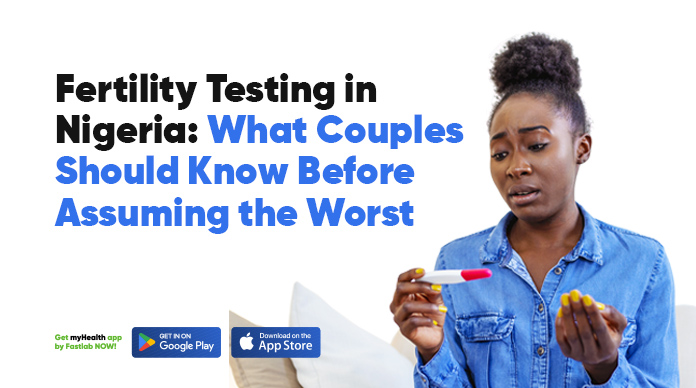
Few conversations carry as much emotional weight as fertility.
In many families, the expectation of children follows marriage closely. When conception delays, concern grows. Advice flows from every direction. Cultural pressure builds quietly, then loudly. Too often, blame follows. Too often, assumptions replace evidence.
Fertility challenges are deeply personal and medical. Like every medical concern, they deserve structured evaluation, not speculation.
Couples often delay proper fertility testing. Some hope time alone will resolve the issue. Others turn to unverified remedies. Some assume the problem lies with one partner without medical confirmation. Meanwhile, months, sometimes years pass without clarity.
Fertility is neither solely a female nor solely a male issue. It is a shared biological process influenced by both partners.
Male factors account for a significant percentage of fertility difficulties worldwide. Yet in many communities, men are rarely evaluated first. Social stigma discourages open discussion. Testing is postponed.
This delay often prolongs uncertainty unnecessarily. Fertility assessment begins with information.
For women, evaluation may include hormonal testing to assess ovulation, thyroid function, and reproductive hormone balance. Ultrasound imaging examines uterine and ovarian structure. Additional tests may be recommended depending on age and history.
For men, semen analysis provides essential insight. It evaluates sperm count, movement, and structure. This single test can clarify many questions and is often simpler than assumed.
Fertility testing aims not to assign blame but to identify factors interfering with conception.
Age plays a significant role. As more Nigerians pursue education and careers before starting families, the average age of first-time parents rises. While this shift reflects social progress, it influences fertility dynamics. Reproductive capacity changes over time, especially for women.
Lifestyle factors also matter. Chronic stress, poor sleep, smoking, excessive alcohol, untreated infections, and metabolic conditions such as diabetes affect fertility.
In some cases, fertility challenges are temporary and manageable. Hormonal imbalances can be treated. Infections addressed. Lifestyle adjustments improve outcomes.
Without testing, couples navigate uncertainty.
One damaging aspect of fertility difficulty is silence. Couples may suffer privately, avoiding discussion out of fear of judgment. The longer clarity is delayed, the heavier the emotional burden.
Structured medical evaluation replaces silence with understanding. Not every delay in conception indicates infertility. Clinically, infertility is defined as the inability to conceive after one year of regular, unprotected intercourse for couples under 35, or after six months for couples over 35. Knowing when to seek evaluation reduces unnecessary panic and prevents delay.
In Nigeria’s evolving healthcare landscape, access to consultation and diagnostic testing is becoming more coordinated. Instead of navigating multiple facilities independently, couples consult licensed physicians, receive guided testing recommendations, and review results within a structured system.
Fertility is complex but not mysterious.
When approached scientifically rather than emotionally, many concerns become manageable.
The goal of fertility testing is not to confirm worst fears but to provide direction.
At Fastlab, consultation and diagnostic coordination simplify that journey. Couples gain clarity before making decisions. They move from assumption to evidence.
In matters as sensitive as fertility, information is not cold or clinical. It is empowering.Sometimes the most difficult conversations become easier once the facts are known.
Download myHealth App today to start your free consultation.